
Presenting
Holding your audience’s attention during a presentation
ByJerre Maas · · last updated · 3min read
Holding an audience’s attention during a presentation takes variety, not tricks. Here’s how I switch between doing, watching, talking and quiet reflection.
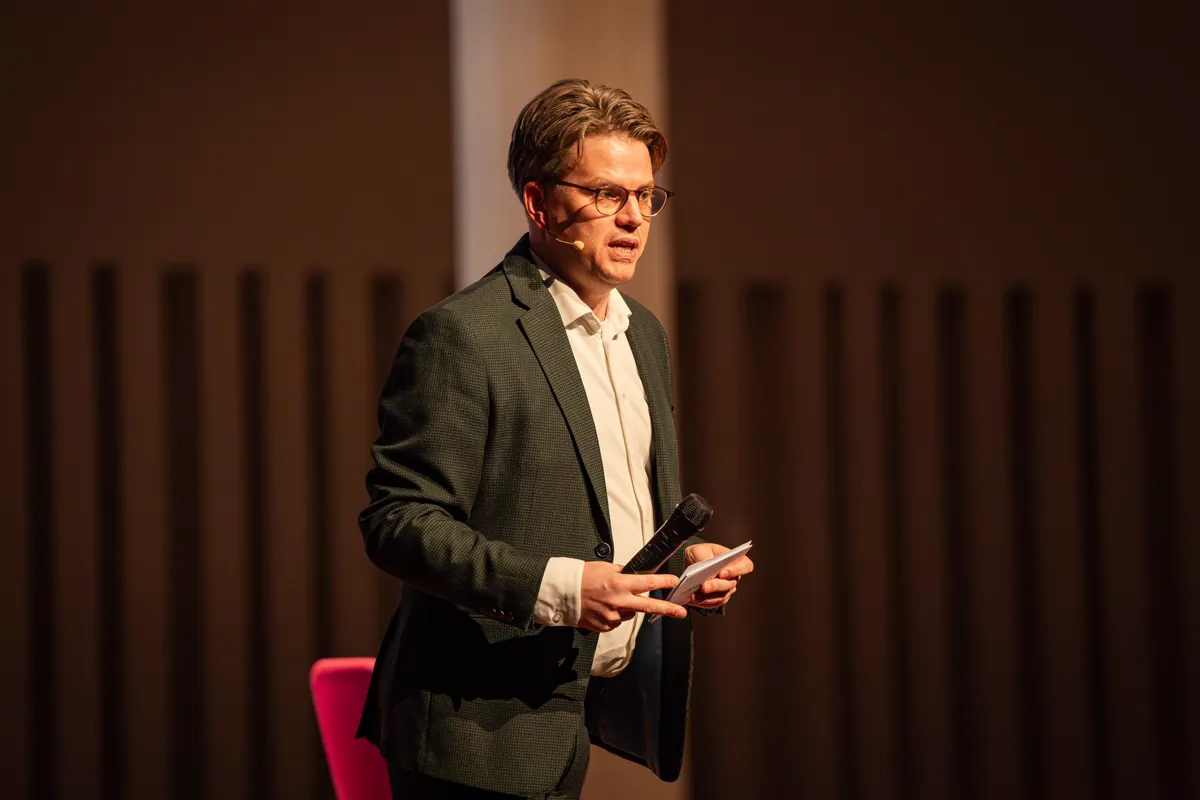
As a presentation coach, I used to get asked this question more than any other, and as an event host I still hear it: how do you hold a room’s attention? My answer is always the same. You can’t. You don’t hold attention, you have to keep earning it. A room gives you a few minutes’ credit, then each listener decides for themselves whether to stay.
The opening and closing matter most
People remember best what they hear first and last. Psychology calls this the primacy and recency effect. Yet at many events I see those two moments wasted. The speaker opens with the Wi-Fi code, the agenda and a lengthy round of introductions, then closes with “I’ll leave it there”.
So put your key message at the start and repeat it at the end. Housekeeping announcements can go somewhere in the middle, or you can leave them to the event host.
Not everyone listens in the same way
There are many theories about how people learn, from Kolb’s learning cycle to Gardner’s multiple intelligences. You don’t need to know them to give a good presentation. What I take from them is simple: different listeners take in information in different ways. That’s why I consciously switch between four formats.
- Doing. The audience gets moving or makes a choice. Stand up or stay seated in response to a statement, or vote live on your smartphone.
- Watching and listening. A story, an image or a short video.
- Together. Talk to the person next to you for two minutes. Name three projects together where you could use this tomorrow.
- On your own. Take a quiet moment and write down what you think was the most important message of the past quarter of an hour.
The common mistake: talking at people
Nine out of ten speakers deliver their entire talk in the watching-and-listening format. They talk at the audience from the first minute to the last. A good speaker can get away with that for a while, but even their audience’s attention will dip at some point. That’s not the audience’s fault. People can only keep taking in information for so long.
A brief switch to another format brings people out of sponge mode. They process what they’ve just heard, and then there’s room for something new. So you don’t lose time, you get the second half of your talk back.
How to do it
- Write down your key message in one sentence. If you can’t, your talk isn’t ready yet.
- Put that sentence in your first and last minute.
- Divide the rest into sections of no more than ten to fifteen minutes.
- Choose a different format for each transition: a question to the room, a chat with the person next to you, a quiet moment.
- Afterwards, be honest about where you filled time without adding anything, and cut those parts.
Dare to do things differently
I understand that this can feel daunting. Asking the room a question, getting people to talk to each other or asking them to stand up can feel like sticking your head above the parapet. What if nobody responds? My experience after years on stage is that audiences are almost always grateful. People would rather be in a room where something is happening than one where they have to wait an hour for the break.
What this means for the organiser
As an organiser, you can do a lot before anyone steps on stage. Ask speakers in advance how they plan to involve the room. Don’t schedule four forty-five-minute speakers back to back without a change of pace. A good event host keeps an eye on the rhythm throughout the day and ensures there’s variety between speakers. If you’re unsure which role you need, read the difference between an event host, moderator, debate chair and presenter.
For those who aren’t well known yet
A well-known speaker often gets a little more credit from the room, because people came to hear them. As a lesser-known speaker, you don’t have that. That’s your opportunity. A client remembers the speaker who kept the room alert, not the speaker with the prettiest slides.
Don’t take more time than you need
The most important tip has nothing to do with presentation formats. Many speakers want to fill all the time they’ve been given. That almost always makes for a weaker talk. Choose one key message, deliver it as well as you can, then stop. No one has ever held it against a speaker for finishing five minutes early.
Frequently asked questions
- How long can an audience keep its attention on a presentation?
- There’s no fixed limit, but even a good speaker’s audience will lose focus after a while. So switch formats after a section of ten to fifteen minutes, for example by asking the room a question or having a short chat with the person next to you.
- Where should I put my key message in a presentation?
- At the beginning and at the end. People remember those moments best, so don’t fill them with housekeeping announcements or a lengthy round of introductions.
- Do I have to use all my speaking time?
- No. You’ll make more of an impression with one well-told point and an early finish than with a talk that simply fills the time.
An earlier version of this article was published onjerremaas.nl. Oorspronkelijk verschenen op Presensatie.nl (2015). Herschreven in 2026.
Read more
1 October 2026
· Jerre MaasPresentingEye contact with your audience: how to tell if your story is landing
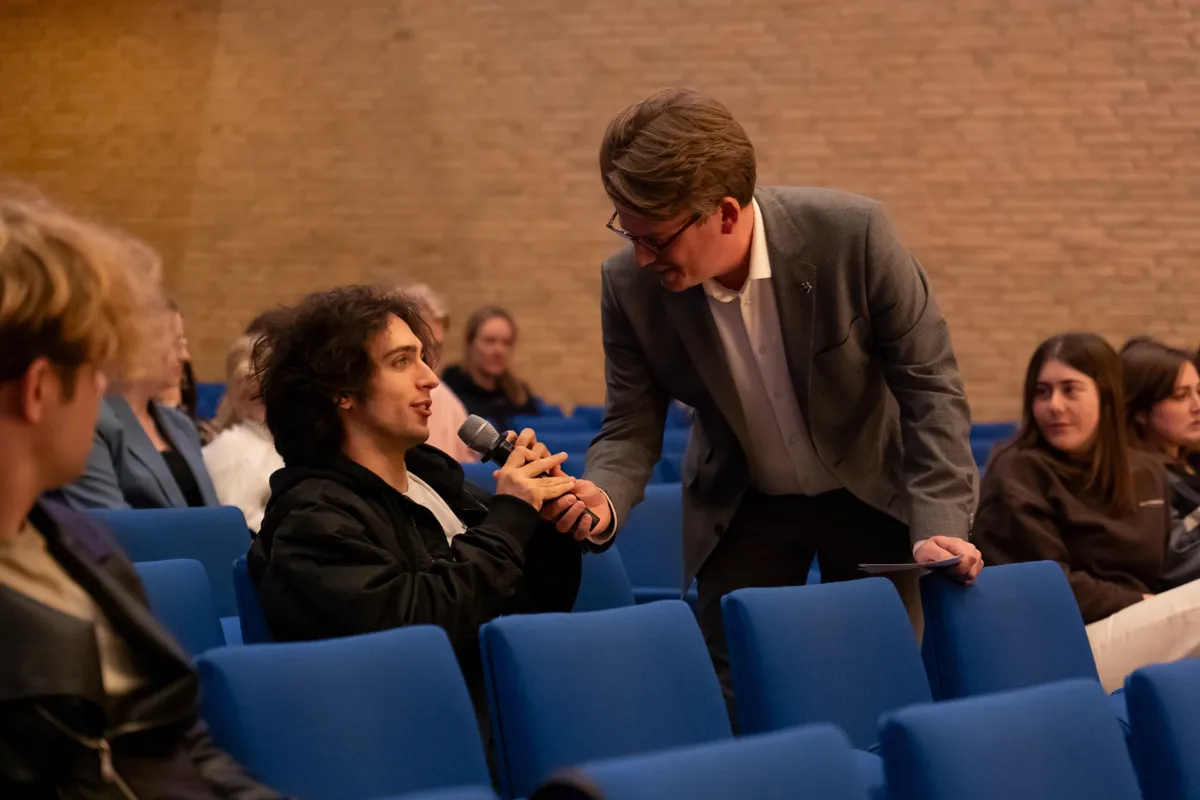
Eye contact when presenting is not a trick for dealing with nerves. It is how you tell whether your message is getting through. Here is how to do it with a small group and in a large auditorium.
3 min read
27 September 2026
· Jerre MaasPresentingMehrabian’s 7-38-55 rule: what it really says
Mehrabian’s 7-38-55 rule doesn’t say that words hardly matter. Here’s what the research did show, and what you can take from it as a speaker.
3 min read
15 September 2026
· Jerre MaasPresentingNerves when presenting: lessons from Waldorf and Statler
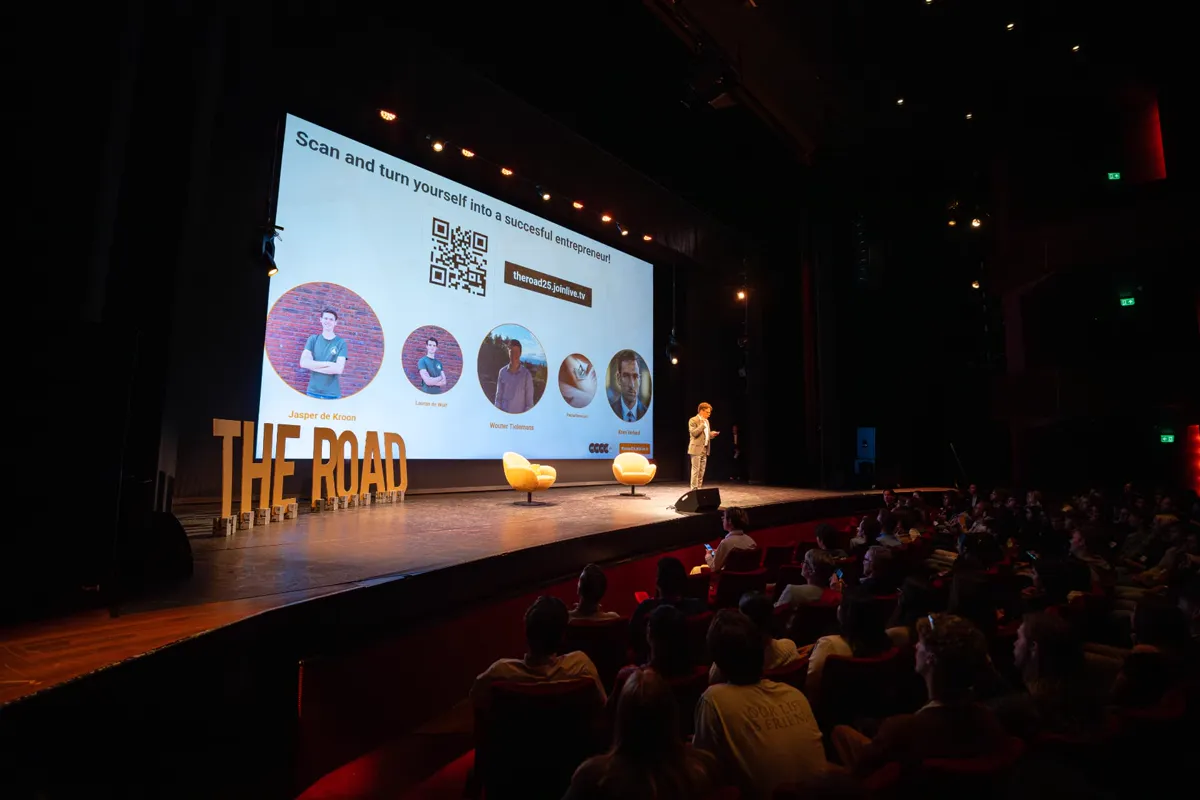
Nervous about presenting? The two grumpy Muppets on the balcony are in your own head. Here’s how to deal with that critical voice, with tips from my training sessions.
3 min read
Speakers who talk about this

Martijn van EssenWith a pitch video
Onze aandacht bepaalt hoe we samenwerken en wat normaal wordt.
Presents in Dutch
Across the Netherlands · Speak · Collaboration and team development, Social psychology
From € 1,450 per day, excluding VAT

Cas de Morree
Laten we stoppen met de onzin die we werk zijn gaan noemen.
Presents in English and Dutch
Across the Netherlands · Speak, Engage · Collaboration and team development, Personal growth
From € 1,950 per half-day, excluding VAT

Jan Bellemakers
Jan begeleidt op een creatieve manier sessies, helpt teams in hun ontwikkeling en maakt van bijeenkomsten een gezellig succes.
Presents in Dutch
North Brabant · Host, Engage · Collaboration and team development, Creativity
From € 450 per half-day, excluding VAT