
Presenting
Mehrabian’s 7-38-55 rule: what it really says
ByJerre Maas · · last updated · 3min read
Mehrabian’s 7-38-55 rule doesn’t say that words hardly matter. Here’s what the research did show, and what you can take from it as a speaker.
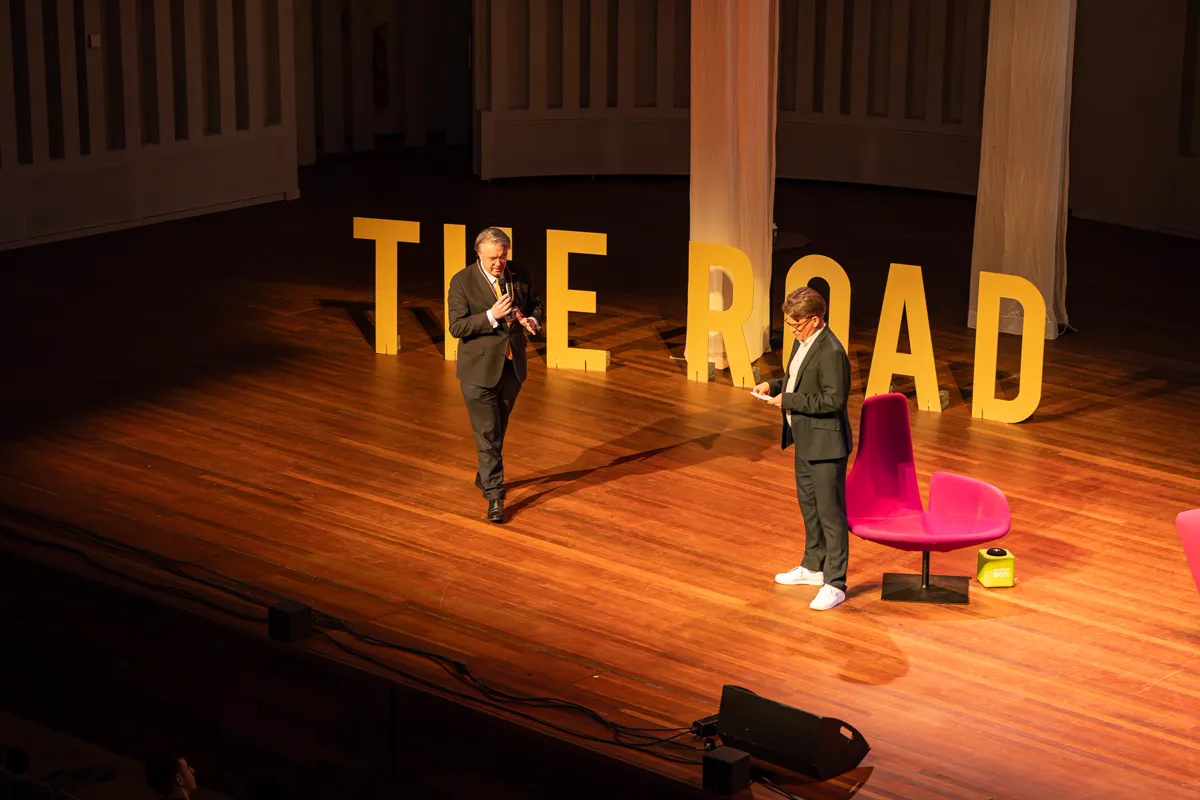
Almost every communication training course mentions it: Albert Mehrabian’s 7-38-55 rule. What your audience takes away from your message is supposedly made up of 7 per cent words, 38 per cent voice and 55 per cent body language. The conclusion often drawn is that what you say doesn’t really matter, as long as you look the part.
That’s a misunderstanding. And a persistent one, because I still hear it in rooms and at training sessions.
What the research was about
In the 1960s, Mehrabian studied inconsistent messages. Situations where you say one thing while your tone or facial expression shows something else. For example, participants heard a word with a negative meaning spoken cheerfully. Or they saw a facial expression paired with a neutral word. They had to judge what the other person was really feeling.
In that specific situation, voice and facial expression carried the most weight. That is, when words and signals contradict each other, and the subject is feelings or attitude.
How it became a rule
The findings were then applied to all kinds of communication. Including presentations where you convey information or an idea. The research says nothing about that. Mehrabian himself also pointed out that his findings were not intended to be applied so broadly.
It’s a good example of how a figure can take on a life of its own. Three percentages sound precise and scientific, so no one asks where they came from.
What you can take from it
Body language and voice matter, especially because they need to match what you say. If you talk enthusiastically about a plan but stand with your arms crossed, the audience believes your body. The research has something to say on that point.
But don’t let anyone tell you that the content is secondary. A strong story with the right words remains the foundation. Give it just as much attention as your posture.
The common mistake
I often see the mistake that follows from this misconception among speakers who have just completed a training course. They practise their posture, gestures and use of voice, and forget that their story still has no beginning or end. The result is a speaker who looks confident but says nothing that sticks in the audience’s mind.
How to make sure your words and body language match
- Start with the content. What is your message in one sentence, and what example will make it concrete?
- Then practise out loud, preferably in front of someone who will be honest with you.
- Don’t ask that person whether you stood well. Ask where your words and posture seemed to say different things.
- Only then adjust your posture. Often, things fall into place on their own when you believe what you’re saying.
What this means for the client
Choose a speaker for what they have to say, rather than for how polished their showreel looks. Ask about the core of their story and an example they use. The same applies to a chair: they need to be able to introduce or sum up a speaker in a few sentences, and that’s all about words. In the article about the roles, you can read what to expect from each role.
For the less well-known speaker
A well-known name can sometimes rely on their presence. As a less well-known speaker, you’re chosen for what you say. That’s good news. Invest in your story, and make sure your body language doesn’t contradict it. Then you’ll have the audience right where you want them.
Frequently asked questions
- Is Mehrabian’s 7-38-55 rule correct?
- Only for the situation he studied: when words and tone contradict each other and the subject is feelings or attitude. The research says nothing about presentations in general.
- Is body language more important than what you say?
- No. Your body language needs to match your words, but a strong story remains the foundation of a good presentation.
- What did Mehrabian himself mean?
- He pointed out that his findings were not intended to be applied as broadly as they often are.
An earlier version of this article was published onjerremaas.nl. Oorspronkelijk verschenen op Presensatie.nl (2014). Herschreven in 2026.
Read more
9 October 2026
· Jerre MaasPresentingHolding your audience’s attention during a presentation
Holding an audience’s attention during a presentation takes variety, not tricks. Here’s how I switch between doing, watching, talking and quiet reflection.
4 min read
1 October 2026
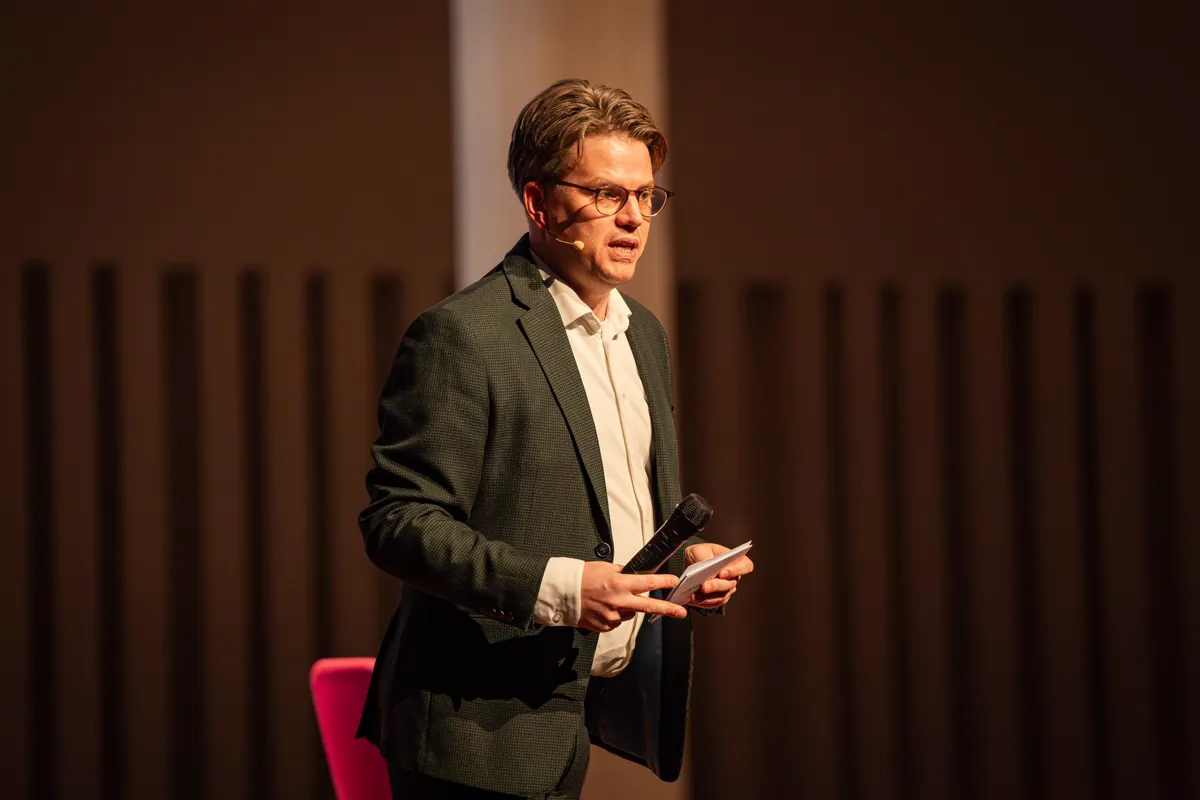
· Jerre MaasPresentingEye contact with your audience: how to tell if your story is landing
Eye contact when presenting is not a trick for dealing with nerves. It is how you tell whether your message is getting through. Here is how to do it with a small group and in a large auditorium.
3 min read
23 September 2026
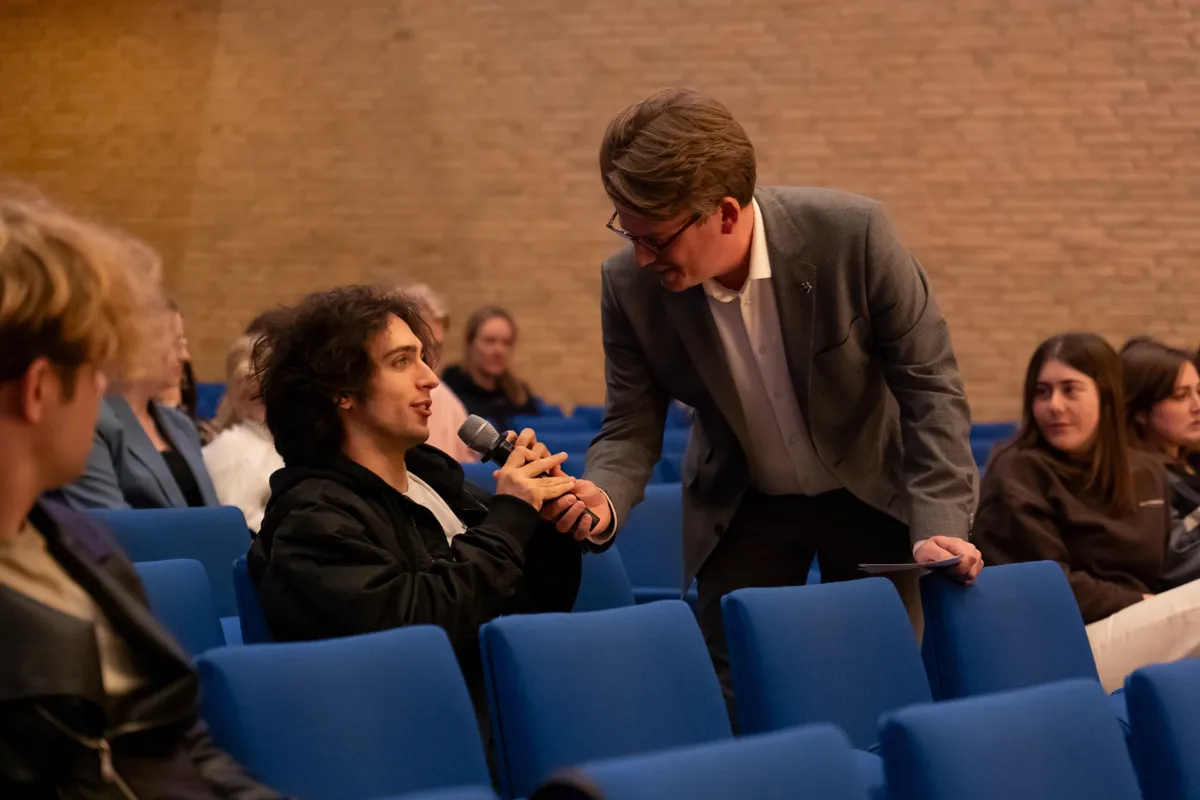
· Jerre MaasPresentingSlides in your presentation: a tool, not a script
Making slides for a presentation? Start with your story. Why your presentation, your tool and your handout are three different things, each with its own purpose.
3 min read
Speakers who talk about this

Aaliyah Muggen
Aaliyah Muggen deelt hoe het is om op te groeien met een vader met complexe PTSS en wat dat betekent voor het gezin.
Presents in Dutch
Drenthe · Speak · Resilience, Health and vitality
From € 150 per half-day, excluding VAT

Martijn van EssenWith a pitch video
Onze aandacht bepaalt hoe we samenwerken en wat normaal wordt.
Presents in Dutch
Across the Netherlands · Speak · Collaboration and team development, Social psychology
From € 1,450 per day, excluding VAT

Alison Sof
Integratief therapeut, coach en spreker
Presents in Dutch
South Holland · Speak, Host, Engage · Personal growth, Health and vitality
From € 500 per half-day, excluding VAT