Psychology
Group pressure in the room: why anonymous voting helps
ByJerre Maas · · last updated · 2min read
The Asch experiment shows how strong group pressure can be. That is why I often ask an audience to vote anonymously first, so you can hear what people really think.
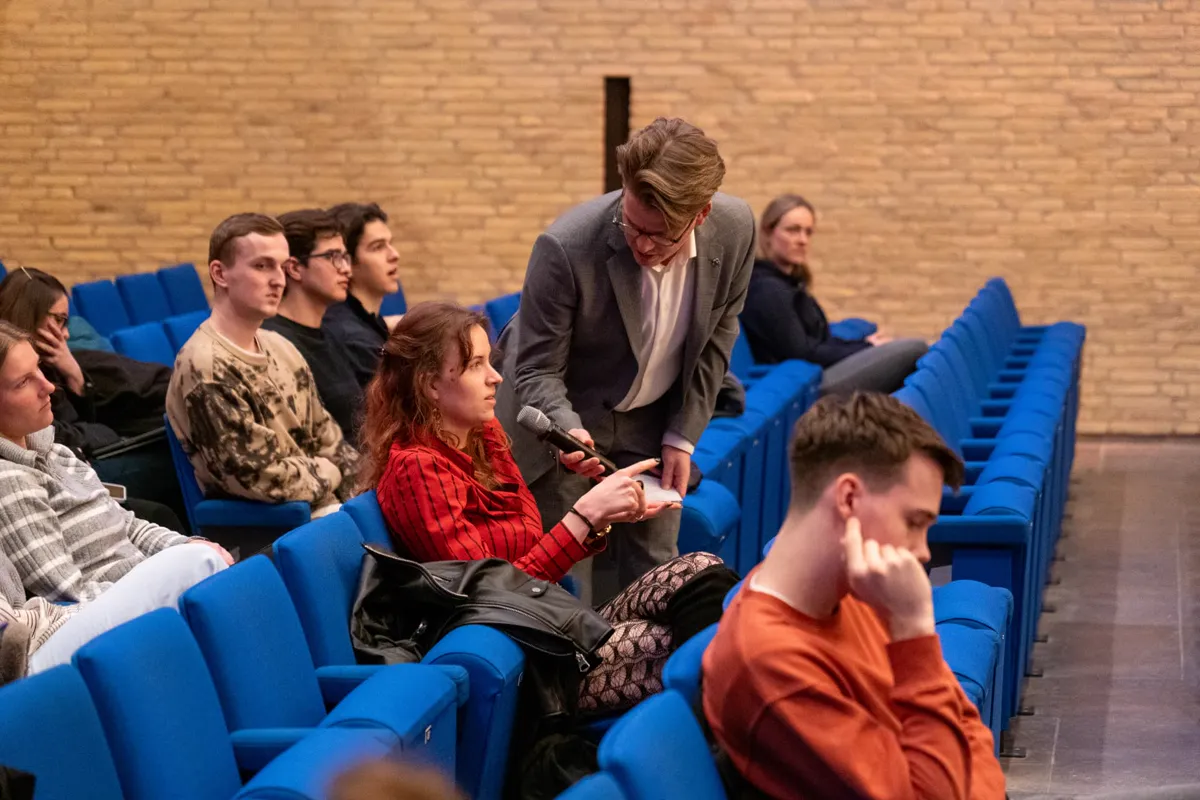
In the 1950s, Solomon Asch conducted a simple experiment. Participants saw a line and had to say which of three other lines was the same length. An easy question, one you would almost never get wrong without a group. But the other people in the group were confederates and deliberately all gave the same wrong answer.
About three-quarters of the real participants went along with the group at least once, against their own perception.
Two things made a difference
- One ally. If one other person gave the right answer, people were much more willing to give their own answer.
- Anonymity. If people did not have to say their answer out loud, they were less likely to go along with the group.
For anyone who works with groups, those are two useful levers to pull.
What this means in a room
I see the same thing in brainstorming sessions, workshops and conferences. If the director or a well-known speaker has already given their opinion, the room goes quiet. Or everyone nods along. Not because they agree, but because it feels uncomfortable to disagree.
The result is that an organisation makes decisions based on support that does not really exist. Everyone agreed in the room, and then at the coffee machine you hear what people really thought.
The common mistake
The mistake I see most often is well-intentioned. The manager opens the session with their own view, "to get the conversation started". That closes the conversation straight away. Another classic is asking "does everyone agree with this?" in a packed room. Almost no one raises their hand to say they disagree.
What I do about it
- Vote first, then talk. Ask everyone to give their opinion anonymously first, for example on their smartphone, and then show the results. That way, you can see what the room really thinks.
- Put hierarchy last. Ask managers to respond only after others have had their say.
- Look for an ally. If I see someone hesitating, I explicitly ask if anyone sees it differently. One dissenting voice makes it easier for others.
An approach for your next session
- Phrase the question so that genuinely different answers are possible.
- Ask everyone to vote anonymously before anyone has said anything about it.
- Show the results and ask the minority first: who voted differently, and why?
- Ask the manager to respond last.
What this means for the client
If you want to know what people really think at a workshop or strategy day, bring in someone to facilitate the process. A facilitator for a brainstorm or workshop, a moderator for a panel or audience discussion. In the article about the differences between the roles, you can read which role suits your session.
For the facilitator who wants to stand out
This is also one of the reasons we started using tools years ago that let an audience vote anonymously and ask questions. Not for the technology itself, but because it helps you bring a group's real opinion to the surface. As a less well-known facilitator, you stand out by doing exactly that: the client hears something afterwards that they did not know before.
Frequently asked questions
- What did the Asch experiment show?
- That about three-quarters of participants went along with a wrong group answer at least once, against their own perception.
- How can you prevent group pressure in a meeting or workshop?
- Ask people to vote anonymously first, ask managers to respond last, and explicitly invite dissenting opinions.
- Why does one dissenting voice help?
- In Asch's research, people were much more willing to give their own answer as soon as one other person did the same.
An earlier version of this article was published onjerremaas.nl. Gebaseerd op een artikel op PsyBlog.nl (2011). Herschreven in 2026. Bron: Asch (1956), Psychological Monographs.
Read more
11 September 2026
· Jerre MaasPsychologyThe peak-end rule at your event: plan your peak and your finish
The peak-end rule shows that people mainly remember an event for its high point and its ending. What does that mean for your conference, presentation or party?
3 min read
3 September 2026
· Jerre MaasPresentingPersuading in a debate: tips from years of debate training
Debating and persuading are skills you learn through practice. Lessons from years of debate training: choose one or three arguments, listen carefully and persuade the jury.
3 min read
9 October 2026
· Jerre MaasPresentingHolding your audience’s attention during a presentation
Holding an audience’s attention during a presentation takes variety, not tricks. Here’s how I switch between doing, watching, talking and quiet reflection.
4 min read
Speakers who talk about this

Jan Bellemakers
Jan begeleidt op een creatieve manier sessies, helpt teams in hun ontwikkeling en maakt van bijeenkomsten een gezellig succes.
Presents in Dutch
North Brabant · Host, Engage · Collaboration and team development, Creativity
From € 450 per half-day, excluding VAT

Martijn van EssenWith a pitch video
Onze aandacht bepaalt hoe we samenwerken en wat normaal wordt.
Presents in Dutch
Across the Netherlands · Speak · Collaboration and team development, Social psychology
From € 1,450 per day, excluding VAT

Aaliyah Muggen
Aaliyah Muggen deelt hoe het is om op te groeien met een vader met complexe PTSS en wat dat betekent voor het gezin.
Presents in Dutch
Drenthe · Speak · Resilience, Health and vitality
From € 150 per half-day, excluding VAT