
Psychology
The peak-end rule at your event: plan your peak and your finish
ByJerre Maas · · last updated · 3min read
The peak-end rule shows that people mainly remember an event for its high point and its ending. What does that mean for your conference, presentation or party?
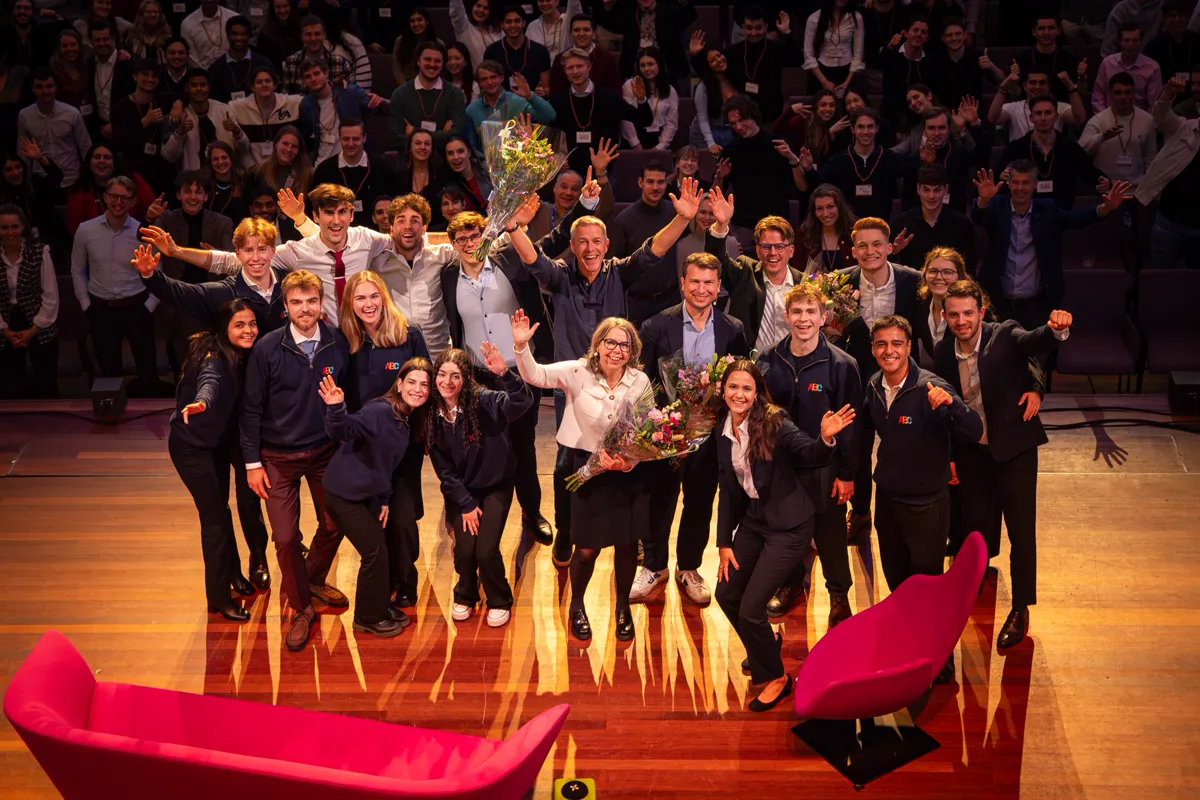
How do we look back on an experience? Not as the average of all the moments combined. Psychologist Daniel Kahneman showed that we mainly remember two moments: the high point and the ending. This is called the peak-end rule. For anyone putting together a conference, presentation or party, it may be the most useful bit of psychology there is.
The research
In a well-known experiment in 1993, people held their hands in cold water at 14 degrees for sixty seconds. In a second round, this lasted ninety seconds: the same sixty seconds, plus thirty seconds during which the water became one degree warmer. When asked which round they wanted to repeat, most people chose the longer one.
Objectively, this meant more discomfort, but with a less unpleasant ending. Similar results can be seen in medical examinations: a calmer ending makes patients feel that the whole experience was less unpleasant.
What this means for an event
- Plan a real high point. A moment that stands out. A surprising speaker, an interactive highlight, a quiz that builds suspense. Without a high point, no one has anything to talk about afterwards.
- Don't let the ending fizzle out. Many conferences end with an overlong panel, a rushed summary and a muddled announcement about drinks. That final quarter of an hour colours people's memories of the whole day.
- Stop at your high point. It is better to finish a little earlier on a strong moment than to carry on until the energy has gone. That applies to a presentation, a quiz and a party.
The common mistake
Most running orders are created from start to finish. The opening gets all the attention, with an opening film and a strong first speaker. Then the programme runs over, and the ending is cut down to whatever time is left. The very moment people remember best gets the least attention.
That's why I plan the ending just as carefully as the opening. Often, I even start with the ending. What should people feel as they walk out of the room?
How to approach it
- Decide in advance which moment will be the day's high point, and give it a good place in the programme. Not straight after lunch.
- Write out the ending minute by minute. Who has the last word, and what is it?
- Build in a buffer before the ending, so delays elsewhere don't eat into it.
- Agree with your event host what will be cut if the programme runs over. The ending should not be on that list.
And what about a presentation?
Finish with your strongest point, and leave the audience with a feeling. Not with the question of whether there are any questions. It's better to schedule the Q&A before your final minute, so you have the last word.
What this means for the client
A good event host looks after the high point and the ending throughout the day, even when the programme shifts. At an evening event or gala, a presenter does the same. Discuss what's on the programme in your briefing, and which moment people should remember. If you want to know which role you need for that, read the article on the differences between an event host, moderator, debate chair and presenter.
For the speaker who stands out
As a less well-known speaker, you are rarely top of the bill. You don't have to be. If your session is what people talk about over drinks, you've created the day's high point. So think about your own talk in terms of a high point and an ending too, rather than a steady stream of information.
Frequently asked questions
- What is the peak-end rule?
- Daniel Kahneman's insight that people mainly judge an experience afterwards by its high point and its ending, not by the average of all the moments.
- How do I use the peak-end rule at an event?
- Plan a clear high point in the programme, protect the ending from delays and finish a little earlier on a strong moment if you can.
- When should I schedule the Q&A in a presentation?
- Before your final minute, so you can finish with your strongest point rather than with the question of whether there are any questions.
An earlier version of this article was published onjerremaas.nl. Gebaseerd op twee artikelen op PsyBlog.nl (2012 en 2014). Herschreven in 2026. Bron: Kahneman, Fredrickson, Schreiber en Redelmeier (1993), Psychological Science.
Read more
9 October 2026
· Jerre MaasPresentingHolding your audience’s attention during a presentation
Holding an audience’s attention during a presentation takes variety, not tricks. Here’s how I switch between doing, watching, talking and quiet reflection.
4 min read
7 September 2026
· Jerre MaasPsychologyGroup pressure in the room: why anonymous voting helps
The Asch experiment shows how strong group pressure can be. That is why I often ask an audience to vote anonymously first, so you can hear what people really think.
2 min read
5 October 2026
· Jerre MaasInteractieInteraction in your presentation: when to use it and when not to
Interaction in a presentation only works if you do something with the outcome. A look at token interaction, and when it is better to let the audience simply listen.
3 min read
Speakers who talk about this

Jan Bellemakers
Jan begeleidt op een creatieve manier sessies, helpt teams in hun ontwikkeling en maakt van bijeenkomsten een gezellig succes.
Presents in Dutch
North Brabant · Host, Engage · Collaboration and team development, Creativity
From € 450 per half-day, excluding VAT

Alison Sof
Integratief therapeut, coach en spreker
Presents in Dutch
South Holland · Speak, Host, Engage · Personal growth, Health and vitality
From € 500 per half-day, excluding VAT

Martijn van EssenWith a pitch video
Onze aandacht bepaalt hoe we samenwerken en wat normaal wordt.
Presents in Dutch
Across the Netherlands · Speak · Collaboration and team development, Social psychology
From € 1,450 per day, excluding VAT