
Interactie
The paper-ball Q&A: asking questions anonymously without technology
ByJerre Maas · · last updated · 3min read
With the paper-ball Q&A, an audience can ask questions anonymously using only paper and a pen. Here’s how this format works and how to use it in your own session.
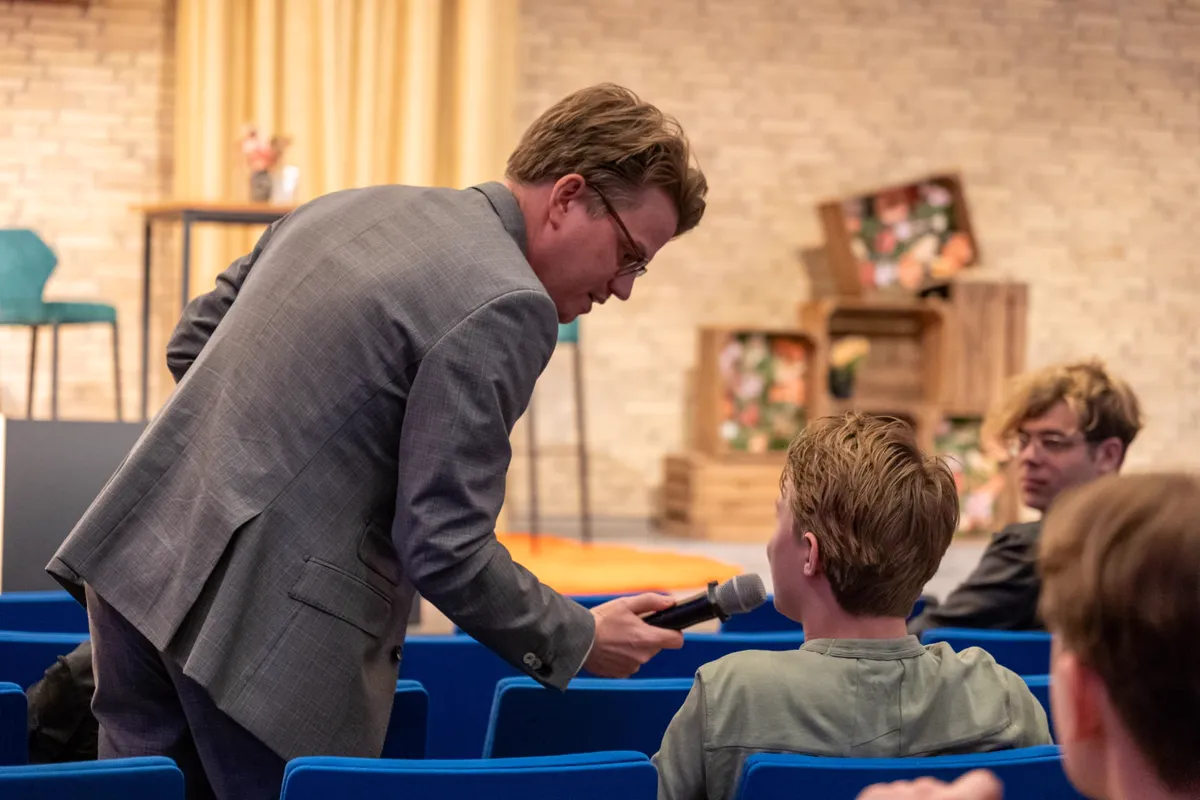
Long before there were apps for audience interaction, I came up with a simple format that still works: the paper-ball Q&A. Everyone can take part anonymously, and you don’t need Wi-Fi, a smartphone or a screen. Just paper, pens and an audience that’s allowed to throw things.
How it works
- Give everyone a sheet of paper and a pen.
- Ask them to write down a question, statement or comment.
- Ask everyone to stand up and crumple their paper into a ball.
- Count down together and have everyone throw their paper balls to the front.
The ingredients for an open discussion or interview are then literally at your feet. Pick up a few, read them out and discuss them with the speaker, panel or audience.
Why it works
- Anonymous. People feel more comfortable asking challenging questions than when they have to put their hand up. No one knows who wrote which paper ball.
- Everyone gets a say. Every paper ball has an equal chance of being picked. Quieter people in the audience get a turn too. The microphone doesn’t automatically go to whoever is quickest.
- Energy. Standing up and throwing is playful. After a programme where everyone has been sitting for a long time, the energy in the room rises straight away.
A common mistake
The format stands or falls on what you do next. I’ve seen speakers ask people to throw their paper balls, then pick up three that happened to land conveniently. The audience notices. Pick genuinely random paper balls, and read out the difficult questions too. Otherwise, it becomes a game rather than a conversation, and an audience quickly sees through that.
Make sure there’s enough time too. A five-minute paper-ball round at the end of a programme that’s already overrun feels like a box-ticking exercise.
Other uses
You can also use it during your own presentation. For example, create a menu of topics you can discuss. Ask the audience to write a question or comment for each topic, then choose which paper balls to pick up. The audience becomes a co-owner of your story, and your presentation naturally becomes more of a conversation.
It also works well as an opening to a round-table discussion or workshop. The questions on paper immediately give you an idea of what’s on people’s minds, before anyone has said anything out loud.
Paper or digital
These days, I often do the same thing digitally, using live questions sent in via smartphones. The principle is the same: anonymous, equal chances for everyone, and an audience that joins in. But the paper version remains a good option for smaller groups, or when the technology isn’t working.
What this means for the organiser
Make sure there’s enough paper and enough pens on the chairs, and a stage where people can throw paper balls without hitting any equipment. Ask your chair or facilitator in advance if they’d like to use this format, and where it could fit in the programme. It works best after a content-rich session, when people have something to respond to. For advice on which role is best to hire for this, read the article about the differences between these roles.
For speakers who want to stand out
Many speakers finish with “Any questions?”, then get silence. With a format like this, you show that you take the audience seriously, even if you’re not a big name yet. It costs nothing, requires no technology, and people talk about it afterwards.
Frequently asked questions
- What is a paper-ball Q&A?
- A format where everyone writes a question on paper, crumples it into a ball and throws it to the front. The speaker or chair picks up random paper balls and discusses the questions.
- Why does asking questions anonymously work better?
- People feel more comfortable asking challenging questions, and quieter participants get a turn too because every paper ball has an equal chance of being picked.
- Can you do this digitally too?
- Yes, using live questions sent in via smartphones. The principle stays the same. The paper version works well for smaller groups or when the technology isn’t working.
An earlier version of this article was published onjerremaas.nl. Oorspronkelijk verschenen op Presensatie.nl (2014). Herschreven in 2026.
Read more
5 October 2026
· Jerre MaasInteractieInteraction in your presentation: when to use it and when not to
Interaction in a presentation only works if you do something with the outcome. A look at token interaction, and when it is better to let the audience simply listen.
3 min read
9 October 2026
· Jerre MaasPresentingHolding your audience’s attention during a presentation
Holding an audience’s attention during a presentation takes variety, not tricks. Here’s how I switch between doing, watching, talking and quiet reflection.
4 min read

1 October 2026
· Jerre MaasPresentingEye contact with your audience: how to tell if your story is landing
Eye contact when presenting is not a trick for dealing with nerves. It is how you tell whether your message is getting through. Here is how to do it with a small group and in a large auditorium.
3 min read
Speakers who talk about this

Jan Bellemakers
Jan begeleidt op een creatieve manier sessies, helpt teams in hun ontwikkeling en maakt van bijeenkomsten een gezellig succes.
Presents in Dutch
North Brabant · Host, Engage · Collaboration and team development, Creativity
From € 450 per half-day, excluding VAT

Alison Sof
Integratief therapeut, coach en spreker
Presents in Dutch
South Holland · Speak, Host, Engage · Personal growth, Health and vitality
From € 500 per half-day, excluding VAT

Cas de Morree
Laten we stoppen met de onzin die we werk zijn gaan noemen.
Presents in English and Dutch
Across the Netherlands · Speak, Engage · Collaboration and team development, Personal growth
From € 1,950 per half-day, excluding VAT